

15 Benefits of Early Childhood Development and Why the Early Years Matter

Dennis Y
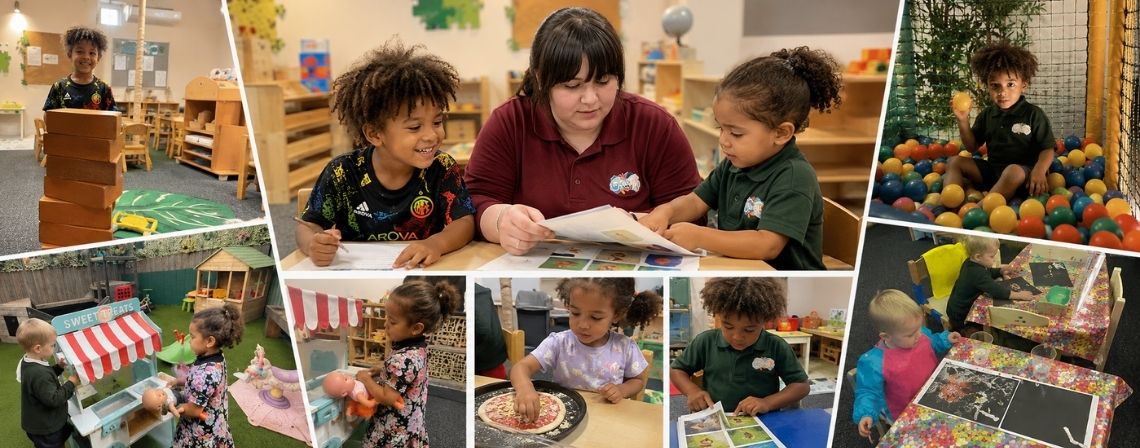
The early years are filled with rapid development, discovery and learning. Children develop communication, physical skills and strength, social skills and emotional understanding. They learn about the world around them and begin to become more independent. UNICEF points out that in the initial years of life, over a million neural connections are made every single second.
Early childhood development includes children’s physical, cognitive, language, social and emotional development. These aspects are closely intertwined. For example, learning to communicate helps children form relationships with those around them. Physical play can help develop coordination, confidence and problem-solving skills.
In England, early learning is guided by the Early Years Foundation Stage (EYFS). It sets statutory guidance for children’s learning, development and care from birth to age 5. The EYFS framework covers seven areas of development and learning. These seven areas are split into three prime areas and four specific areas.
- Communication and language
- Personal, social and emotional development
- Physical development
- Literacy
- Mathematics
- Understanding the world
- Expressive arts and design
Why Is Early Childhood Development Important?
The early years are important because they provide foundations for children’s future learning, relationships and wellbeing.
The UK government’s Giving Every Child the Best Start strategy for early childhood education recognises how important high-quality early education and childcare are. They estimate that attending high-quality early education and childcare for two years or more has a benefit equivalent to achieving a higher grade in around 7 GCSEs.*
The intention is not to rush children through formal academic learning. Instead, early childhood education aims to support learning by providing children with age-appropriate experiences, relationships and opportunities.
15 Benefits of Early Childhood Development:
1. Cognitive Development
Young children learn by exploring their environment, experimenting, and solving problems. Building with blocks, puzzles, sorting objects and exploring their surroundings help children develop problem-solving skills. These activities encourage children to think, make connections, and understand how things work.
These types of activities support children’s early reasoning and thinking skills.
2. Communication and Language:
Talking, singing, reading books and telling stories allow children to hear and practice language. Children can develop vocabulary, express their ideas and needs, listen to others and become confident communicators.
The Education Endowment Foundation (EEF) reported that communication and language interventions can have a positive impact on children’s early learning. Their average impact was equivalent to 7 months’ additional progress.
3. Develop Social Skills:
Children learn social skills from interacting with adults and with other children. Playing games and activities with others allows children to practice sharing, waiting their turn, cooperating and listening.
Children also begin to understand that other people may have different feelings, thoughts and ideas.
4. Emotional Development:
Young children learn to recognise their emotions and find ways to manage their reactions. Adults can support them by helping them put their feelings into words and learn about appropriate responses.
Personal, social and emotional development is one of the three prime areas of learning in the EYFS.
5. Confidence and Self-Esteem:
Completing a task or activity gives children a sense of achievement. Solving puzzles, joining in with group activities or games, creating something, or helping to complete simple tasks can help build confidence.
Supportive environments also teach children that making mistakes is a normal part of learning.
6. Encourages Independence:
Children have a natural desire to do things for themselves. Simple routines like washing hands, feeding themselves, tidying up toys, choosing activities and putting away their belongings provide opportunities to practice independence.
Many of these skills will come in handy when your child begins school.
7. Strengthen Physical Development:
Physical development includes both gross motor skills and fine motor skills. Activities such as running, jumping, climbing, etc strengthen gross motor skills. Fine motor skills are developed through drawing, threading, cutting, building, etc.
Regular opportunities for movement and hands-on activities allow children to develop coordination, control, and physical confidence.
8. Develop Problem Solving Skills:
Young children face problems every day. Building a taller tower, completing puzzles and making something work encourages them to think of different solutions.
Allowing children to try on their own rather than providing the answers immediately develops persistence, reasoning, and flexible thinking.
9. Encourages Curiosity and a Love of Learning:
Children are naturally curious about the world. By observing nature, experimenting with different textures, mixing hues, diving into books, and sparking curiosity through questions, everyday tasks become meaningful learning experiences.
Early years education should nurture children’s natural curiosity instead of focusing on completing formal academic tasks.
10. Support Early Literacy:
Literacy development begins well before children can read books on their own.
Sharing stories, singing nursery rhymes, talking about pictures and listening to sounds can support early language and literacy. Drawing, painting, and other mark making activities help develop the control needed for writing. Literacy is one of the specific areas of learning in EYFS.
11. Develops Early Mathematical Thinking:
Children experience maths concepts in their everyday life. Counting games, comparing sizes, sorting objects, talking about shapes and identifying patterns are natural ways to introduce mathematical ideas.
Children can also deepen their comprehension of math principles, including numbers, sizes, shapes, positions, and measurements, through play and daily routines.
Mathematics is one of the specific areas of learning in EYFS.
12. Builds Self-Regulation and Attention:
Self-regulation skills include gradually learning to control emotions, behaviour, and attention.
Consistent routines and supportive adults will allow them to begin to learning to listen, wait, follow instructions, manage frustration and transition between activities.
These skills help children adapt to learning in school and other environments with lots of stimuli.
13. Supports School Readiness:
Being ready for school involves more than just recognising letters and counting.
Your child will benefit from being able to communicate their needs and basic ideas, listen to others, play and interact with peers, follow simple routines, and increasingly handle their emotions and personal needs.
The EYFS is designed to help give the children the knowledge and skills they need to start school.
14. Create Foundations for Future Learning:
Communication skills, relationships, independence, physical development, problem-solving and curiosity all provide children with foundations for future learning.
Early experiences don’t determine a child’s future. Children develop at different rates, and their personalities mean they will engage with experiences differently. But positive early years experiences can help children enter their next stage of education feeling confident.
15. Supports Overall Wellbeing:
Early childhood development focuses on supporting the whole child. Physical play, creative activities, stories, social interaction and exploring the outdoors can contribute to children’s physical, emotional, social and cognitive development.
Rather than treating development as separate subjects, the EYFS brings them together into 7 areas of learning.
How Do Nurseries Support Early Years Development?
High-quality nurseries can provide children with opportunities to learn through play, exploration, and daily routines.
Little Mowgli Nursery in Leyland offer age-appropriate opportunities for children that encourage communication, creativity, physical development, social interaction, and independence.
The goal is not to try to turn the nursery into a miniature school. Young children can continue to learn through meaningful play experiences and interactions with friendly staff, while developing at their own speed.
Quality is important. The UK government's strategy highlights the impact that high-quality early education and childcare have on children’s development.
How Can Parents Support Their Child’s Development?
Parents and caretakers have a huge impact on their children’s development. Day-to-day activities together provide many opportunities for learning.
- Talk together: Describe the things you’re doing. Ask questions and let your child respond.
- Read together: Share books together and talk about the story and pictures.
- Sing and rhyme: Songs and Nursery Rhymes are great for practising sounds, learning new vocabulary and listening.
- Play together: Follow your child’s interests and let your child take the lead in some activities.
- Encourage independence: Give your child opportunities to try age-appropriate tasks such as tidying their toys or helping with simple chores.
- Explore the outdoors: Go for walks, visit the park or your garden. There are endless opportunities to walk, run, climb and observe together.
FAQs:
1. What age is considered for early childhood development?
Early childhood development starts from birth and includes cognitive, language, physical, social and emotional development during the early years. Different countries and organisations use different age ranges to define early childhood.
2. What is the importance of early childhood development?
Early childhood lays the foundations for communication skills, relationships, independence, physical skills, problem-solving, learning and readiness for school.
3. What are the main areas of child development?
Physical, cognitive, language, social and emotional development are often considered the main areas of development. As you can see from the EYFS framework, early learning is divided into seven interconnected areas of development.
4. Does nursery help with school readiness?
Yes. Nursery can help children learn social skills, communication, independence, self-regulation and emotional development. These skills can help children meet the demands of a school setting.
Choosing a Nursery in Leyland for the Early Years:
At Little Mowgli Nursery in Leyland, we know childcare should support the development of the whole child.
We aim to provide children with a warm, nurturing environment where they can play, discover, communicate with others, build relationships and learn to do things independently.
Children learn at different rates and will not develop in exactly the same way. Positive interactions with adults and meaningful play experiences can help children gain confidence to continue developing their skills.
If you're looking for a nursery or preschool in Leyland that values early childhood development and learning through meaningful experiences, contact Little Mowgli to find out more or arrange a visit.
Leyland, PR25 2DY

.svg)