

10 Fun Preschool Activities on Shapes

Dennis Y
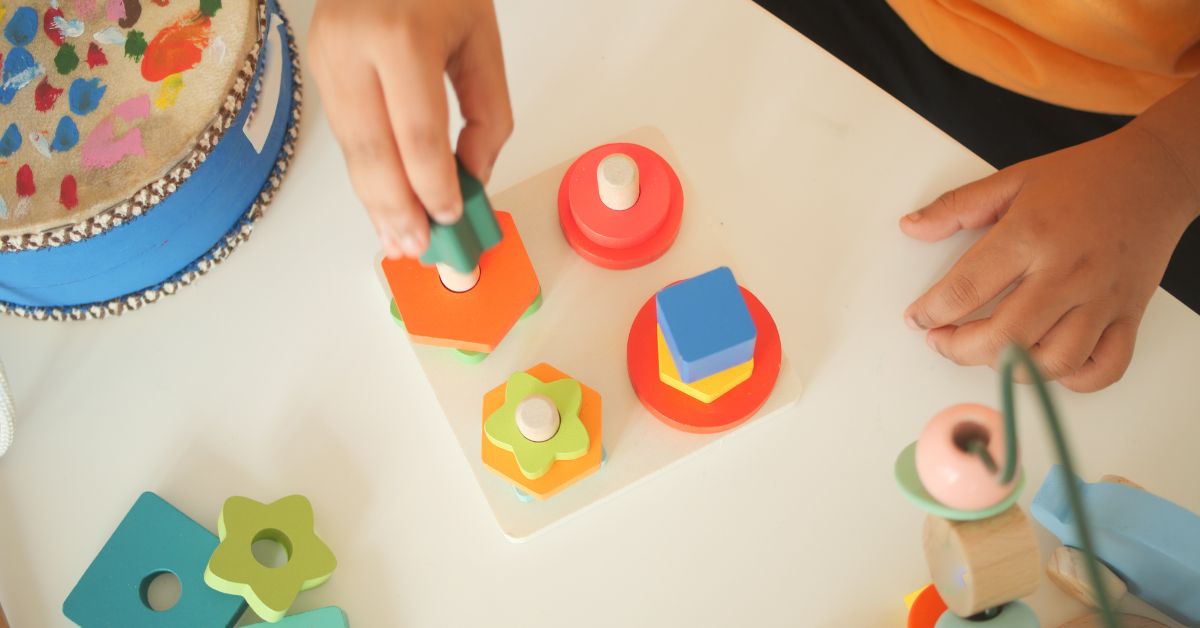
Teaching shapes to young children opens doors to mathematical thinking, spatial awareness, and problem-solving skills. When preschoolers learn to recognise circles, squares, triangles, and rectangles, they build a foundation for geometry that will support them throughout their education. At Little Mowgli Nursery, we believe learning happens best through play, exploration, and hands-on discovery. These fun preschool activities on shapes turn abstract concepts into engaging experiences that capture children's natural curiosity.
Why Shape Recognition Matters in Early Years
Before we explore specific activities, let's understand why shapes matter. Young children begin recognising shapes before they can name them. Research shows that children as young as one year old can spot matching shapes and tell them apart. This visual perception forms the starting point for understanding geometry.
Shape recognition connects to many areas of development. Children who understand shapes develop stronger spatial reasoning, which helps with reading maps, completing puzzles, and tackling advanced maths later. The Early Years Foundation Stage recognises shapes as part of mathematical development, where children learn to describe and compare different forms they encounter.
When children play with shapes, they also strengthen fine motor skills, hand-eye coordination, and critical thinking. They learn to classify objects, spot patterns, and understand how smaller shapes combine to create larger ones. These skills transfer to everyday activities, from getting dressed to setting the table.
1. Shape Treasure Hunt Around the Setting
Transform your learning environment into an exciting discovery zone. Give children clipboards with pictures of different shapes and send them on a hunt to find real-world examples. They might spot rectangular doors, circular clocks, or triangular sandwich slices at snack time.
Here is why this works: Children connect abstract shape concepts to concrete objects they see daily. When a child points out that the window is a rectangle or the plate is a circle, they demonstrate understanding that goes beyond rote memorisation.
Take the activity outdoors when weather permits. Nature offers wonderful shape opportunities circular flowers, triangular leaves, and rectangular fence panels. At Little Mowgli Nursery, our outdoor learning area provides endless shape discovery moments where children explore freely and develop their observation skills.
Extension idea: Create a shape photograph book. Take pictures of the shapes children find and compile them into a class book. Children can revisit these images during group time, reinforcing their learning through repetition.
2. Playdough Shape Building
Playdough remains one of the most versatile materials in early years settings. Give children playdough and challenge them to create different shapes by rolling, flattening, and moulding. Younger children might start with simple circles and progress to more complex shapes like rectangles and triangles.
The sensory experience helps memory formation. When children use their hands to create shapes, they engage multiple senses, which strengthens neural pathways. The tactile feedback teaches them about properties circles are smooth and continuous, while triangles have three distinct corners.
Add shape cutters to extend the activity. Children can press shapes into flattened playdough, then discuss the edges and corners they see. Ask open-ended questions: "How many sides does your shape have?" or "Can you make a shape with no straight lines?"
For three-dimensional exploration, show children how to roll playdough into spheres, cylinders, and cubes. This introduces 3D shapes naturally through play.
3. Shape Collage Creation
Provide pre-cut shapes in various colours and sizes along with glue sticks and large paper. Invite children to create pictures or patterns using these shapes. A square might become a house, circles could be wheels, and triangles might form a tree.
Shape collages address an important learning objective: manipulating shapes to create new forms. This compositional skill appears in educational standards because it requires children to visualise how shapes fit together. When a child positions a triangle on top of a rectangle to make a house, they demonstrate spatial understanding.
Try single-shape collages for children who need more practice. A "triangle day" where everything uses only triangles helps children focus on the properties of that specific shape three sides, three corners, various sizes.
Display finished artwork around your setting with labels describing the shapes used. This creates a print-rich environment where children see shape vocabulary regularly.
4. Pattern Block Exploration
Pattern blocks are specifically designed to teach geometric concepts. These coloured wooden or plastic shapes fit together in precise ways, allowing children to create patterns, pictures, and designs. The blocks typically include triangles, squares, hexagons, rhombuses, and trapezoids.
Let children play freely first. They'll naturally experiment with how shapes connect and which combinations work well. As they build, they discover mathematical relationships six triangles make a hexagon, or two trapezoids equal a hexagon.
Introduce pattern cards once children are comfortable with free play. These cards show designs that children recreate using their blocks. Start simple with three or four pieces, gradually increasing difficulty. Children develop visual discrimination skills as they match shapes to pictures.
Pattern blocks lay groundwork for understanding fractions, symmetry, and geometric relationships. The hands-on nature makes abstract concepts concrete and accessible.
5. Shape Sorting Games
Sorting activities teach classification, a key mathematical skill. Provide a mixed collection of shape manipulatives and several containers or hoops. Children sort the shapes by type, colour, size, or any property they notice.
Make sorting interactive by creating a "shape post box." Cut shape openings in a cardboard box circle, square, triangle, and rectangle. Children must identify each shape and post it through the correct opening. This combines shape recognition with problem-solving.
For younger children, start with just two shape categories. As their skills grow, add more shapes and introduce more complex classification. You might ask them to find "all the red circles" or "big triangles," combining multiple attributes.
Sorting games can happen anywhere. During tidy-up time, challenge children to match blocks to silhouettes on the shelf or fit pieces into shape-sorter toys. These everyday moments reinforce learning naturally.
6. Shape Walking and Movement
Get children moving while learning shapes. Use chalk or tape to create large shapes on the floor. Call out instructions: "Walk around the circle," "Jump into the square," or "Hop along the sides of the triangle."
Movement activities engage children who learn best through physical experience. As they trace shape outlines with their feet, they internalise the properties of each shape. The kinaesthetic feedback helps memory formation.
Create a shape hopscotch game where each square contains a different shape. Children identify the shape before hopping on it. This combines gross motor development with shape recognition.
Shape yoga poses offer another movement option. Children might make their bodies into circles (curled up), triangles (downward dog), or straight lines (mountain pose). This creative approach makes learning memorable and engaging.
7. Shape Construction Challenges
Building with blocks teaches three-dimensional thinking. Provide wooden blocks, cardboard boxes, or other construction materials and set shape-related challenges. "Can you build a tower using only cubes?" or "Make something using a cylinder and a rectangular prism."
Construction play naturally incorporates mathematical language. As children build, use descriptive words: "You've placed the cylinder on top of the cube," or "That rectangular block is longer than this square one." This vocabulary enriches their understanding.
The physical act of stacking, balancing, and arranging develops spatial reasoning. Children learn through trial and error which shapes stack well and which don't. A sphere rolls but a cube stays put these discoveries come through hands-on exploration.
Photograph children's constructions and display them with shape labels. This documentation helps children reflect on their work and plan future projects.
8. Shape Story Time
Books provide rich contexts for discussing shapes. Choose stories that feature shapes prominently or that use shapes to tell a narrative. During reading, pause to identify shapes in illustrations. "Look, the door is a rectangle!" or "Can you spot any circles on this page?"
Create your own shape books with children. They can draw or collage shapes to tell a simple story. "The circle rolled down the hill" might feature a circle moving across pages, while "The square house" could show a square with triangle roof.
After story time, extend the learning with related activities. If you've read about shapes in nature, go outside for a shape hunt. If the book featured shape patterns, set up a pattern-making station.
Regular exposure to shapes in literature normalises mathematical language and shows children that shapes exist everywhere in their world.
9. Sensory Shape Discovery
Fill a sensory bin or bag with shape manipulatives and add materials like rice, sand, or fabric scraps. Children reach in without looking and identify shapes by touch alone. This "feely bag" activity develops tactile discrimination.
Ask children to describe what they feel: "It has four straight sides," or "It's round and smooth." This verbal description strengthens their understanding of shape properties and builds mathematical vocabulary.
Create texture shapes for added sensory input. Cut shapes from sandpaper, velvet, or bubble wrap. Children can match identical textures or sort by shape while experiencing different tactile sensations.
Sensory activities particularly benefit children who process information through touch. They offer an alternative pathway to understanding for children who might struggle with purely visual learning.
10. Real-World Shape Cooking
Cooking activities naturally incorporate shapes. Cut sandwiches into triangles, use circular cookie cutters for playdough "biscuits," or notice rectangular crackers at snack time. Food provides meaningful context for shape learning.
At Little Mowgli Nursery, we believe that learning happens throughout the day, not just during structured lessons. Snack preparation becomes a mathematical moment when children identify the shapes of fruit slices or arrange food items by shape.
Let children cut soft foods with safe cutters (always with supervision). They can transform rectangular cheese slices into triangles or use circle cutters on bread. This combines fine motor practice with shape recognition.
Cooking also introduces mathematical concepts beyond shapes measuring, counting, sequencing steps. These interconnected skills support overall mathematical development.
Supporting Shape Learning at Home
Parents and carers can reinforce shape learning in countless ways. Point out shapes during daily routines: "Your jumper has square buttons," or "Look at that triangular roof." This casual noticing helps children see mathematics in everyday life.
Simple games work well at home. Draw shapes in the air and ask children to identify them. Play "I spy" focusing only on shapes. Create shape collections using household items buttons, coins, boxes.
Encourage children to create shape art using paper, crayons, and scissors (with supervision). Building with household items like cardboard boxes, toilet roll tubes, and plastic containers teaches three-dimensional shapes through play.
The key is making shape exploration natural and enjoyable rather than forced or formal. When children see shapes as interesting rather than intimidating, they develop positive attitudes toward mathematics.
Progression in Shape Understanding
Children's shape knowledge develops in predictable stages. First, they recognise that two shapes match without necessarily knowing why. Next, they classify shapes based on similarities they observe. Finally, they can name shapes and describe their properties using mathematical language.
Understanding this progression helps adults meet children where they are. A two-year-old might sort shapes correctly without naming them, while a four-year-old can explain that a square has four equal sides and four corners.
Don't rush children through these stages. Each level of understanding requires time and repeated exposure. The activities described here support all developmental levels, making them suitable for mixed-age groups.
Celebrate every step forward. When a child first identifies a circle independently or explains why a shape is a rectangle, that represents genuine mathematical thinking that deserves recognition.
Creating a Shape-Rich Environment
Beyond specific activities, the overall environment matters. Display shapes at children's eye level. Use shape labels on storage containers, coat hooks, and learning areas. Create a shape word wall with pictures and names.
Provide open-ended materials that encourage shape exploration blocks of various types, drawing materials, clay, construction toys. When children have constant access to these resources, they explore shapes during self-directed play.
Rotate materials regularly to maintain interest. One week might focus on circles with circular puzzles, wheels, and rings. The next week could highlight triangles with different triangle manipulatives and activities.
The physical environment sends messages about what matters. A setting filled with shape opportunities communicates that mathematics is interesting, accessible, and everywhere.
Conclusion
Fun preschool activities on shapes give children hands-on ways to explore mathematical concepts. From treasure hunts to playdough building, from movement games to cooking projects, these activities transform abstract ideas into concrete experiences. Children learn best when they're actively engaged, using their hands, bodies, and imaginations.
Shape recognition builds the foundation for future mathematical success. The spatial reasoning, classification skills, and geometric understanding children develop now support them as they encounter more complex maths later. By making shape learning playful and meaningful, we help children develop both competence and confidence.
Remember that every child learns at their own pace. Some might identify shapes quickly, while others need more time and exposure. Both paths are perfectly normal. Your role is to provide rich opportunities, use encouraging language, and celebrate each child's progress.
Whether you're teaching at a nursery, childminding, or supporting your own child at home, these activities make shape learning engaging and effective. Start with one or two activities that match your resources and children's interests, then expand your repertoire over time.
Frequently Asked Questions
What age should children start learning shapes?
Children begin recognising shapes from around 18 months to two years old, though they won't name them yet. Most children can name basic shapes like circles and squares by age three, with more complex shapes developing through ages four and five. Start with simple exposure through play and gradually introduce shape names as children show interest. The key is following the child's lead rather than forcing formal instruction too early.
Which shapes should preschoolers learn first?
Start with circles, squares, and triangles as these appear frequently in children's environments and have distinct characteristics. Circles are often easiest because they're continuous with no corners. Once children confidently identify these three, introduce rectangles and ovals. More complex shapes like hexagons, pentagons, and three-dimensional shapes can come later as understanding develops.
How can I help a child who struggles with shape recognition?
Focus on one shape at a time for several days before introducing another. Use real objects rather than just pictures actual plates, boxes, and balls help children understand shapes in context. Create opportunities for multi-sensory learning through touch, movement, and building. Avoid testing or quizzing, which creates pressure. Instead, casually point out shapes during daily activities and celebrate small progress.
Do children need to know three-dimensional shapes in preschool?
While two-dimensional shapes take priority, introducing simple 3D shapes like spheres, cubes, and cylinders through play benefits children. They naturally encounter these shapes in their environment through balls, blocks, and containers. Use correct terminology when opportunities arise, but don't expect mastery. The goal is exposure and familiarity rather than formal assessment.
How do shape activities support overall development?
Shape activities build mathematical foundations but also support broader development. Fine motor skills improve through cutting, tracing, and manipulating shapes. Language develops as children learn descriptive vocabulary. Cognitive skills grow through classification, pattern recognition, and problem-solving. Social development happens when children work together on shape projects. These interconnected benefits make shape activities valuable beyond mathematics alone.
Leyland, PR25 2DY

.svg)