

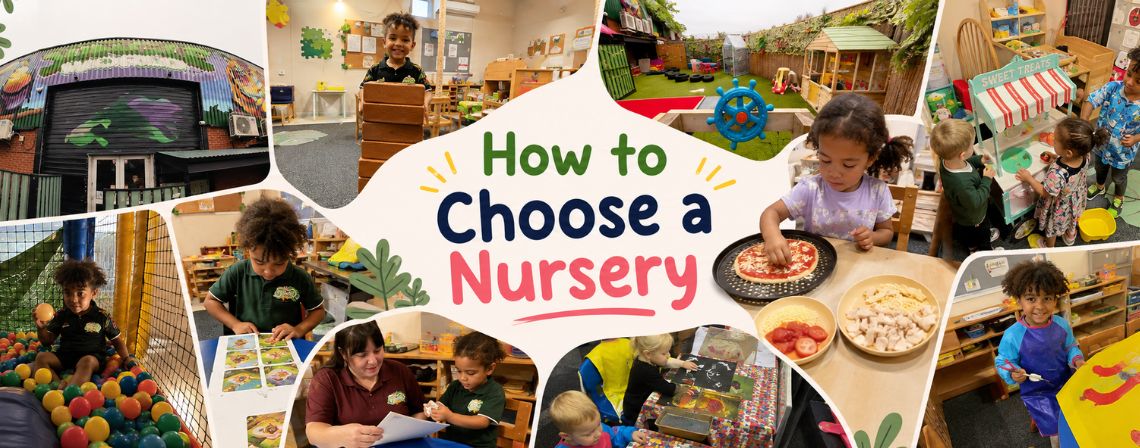
How to Choose a Nursery

Dennis Y
Starting your search for the right nursery can feel like a lot. You want somewhere safe, stimulating, and warm but how do you actually compare settings when most of them have friendly websites and smiling photos? The truth is, choosing a nursery well takes more than a quick scroll. It takes asking the right questions and knowing what to look for beneath the surface.
This guide walks you through every step of that process, from understanding what inspectors look at to working out whether a setting genuinely fits your child.
Why Choosing the Right Nursery Matters More Than You Think
The early years of a child's life shape how they think, communicate, and build relationships. Research from the University of London's Institute of Education consistently shows that high-quality early years provision has long-term benefits for children's attainment and wellbeing. Getting this decision right is worth the time and effort.
That does not mean you need to overthink it, though. With a clear checklist and a couple of visits, most parents find the right setting fairly naturally.
Step 1: Understand the Regulatory Framework First
Before you visit anywhere, it helps to understand how nurseries in England are regulated.
All nurseries must follow the Early Years Foundation Stage (EYFS) statutory framework, published by the Department for Education. This sets the minimum standards for learning, development, and welfare for children from birth to five. It covers everything from staff-to-child ratios to how nurseries must track children's progress.
Here is what the EYFS says about staffing ratios:
- Under 2s: 1 adult to every 3 children
- 2-year-olds: 1 adult to every 5 children
- 3 and over: 1 adult to every 8 children (or 1 to 13 when a Level 6 qualified practitioner is present)
Ofsted inspects nurseries against these standards. From November 2025, Ofsted introduced a new inspection framework with report cards that grade settings across five areas: leadership and governance, curriculum and teaching, achievement, behaviour and routines, and children's welfare and wellbeing. There is no longer a single overall word judgement like "Outstanding" so when you read any nursery's Ofsted report, look at each area separately.
You can read any nursery's inspection report for free on the Ofsted website at ofsted.gov.uk.
Step 2: Work Out What Your Child Actually Needs
Every child is different, and the best nursery for your neighbour's toddler might not suit yours.
Think about:
- Age and stage. A baby under one needs a very different environment to a three-year-old who is ready for more structured play and early literacy.
- Personality. Quieter children sometimes do better in smaller, more intimate settings. More sociable, energetic children might love a busier environment with lots going on.
- Any additional needs. If your child has a SEND diagnosis or you have concerns about development, ask specifically how the nursery supports SEND children. The EYFS requires all settings to have a named Special Educational Needs Coordinator (SENCo).
- Practical logistics. Opening hours, location, and whether the nursery offers funded hours for two, three, and four-year-olds will all affect your decision.
Step 3: Visit in Person and Look Beyond the Surface
A good nursery looks lived-in and busy. Here is what to pay attention to during a visit.
What the Rooms Tell You
Walk through the space slowly. Are the areas well set up for different types of play creative, physical, quiet, imaginative? Are children's own artwork displayed on the walls? Does the outdoor area get used regularly, or does it feel like an afterthought?
Nature-based outdoor play is increasingly recognised as important for young children's development. Settings that take children outside daily in all weathers tend to build greater resilience and physical confidence in children over time.
What the Staff Interactions Show You
Watch how staff speak to children. Do they get down to the children's level? Do they listen when children talk to them? Are they engaged and genuinely warm, or do they feel distracted?
Ask about staff turnover. High turnover in an early years setting is a real warning sign. Children under five build trust through consistent relationships with the same adults. If staff are constantly changing, that continuity breaks down.
Also ask about qualifications. Under the EYFS, the nursery manager must hold at least a Level 3 qualification, and from January 2024, managers appointed in new roles must also hold a Level 2 maths qualification. At least half of all other staff must hold a Level 2 qualification.
What the Communication Feels Like
A good nursery keeps parents genuinely informed. Ask how they share updates about your child's day. Many settings now use secure apps with photos and observations, but the quality of communication matters more than the technology behind it.
Ask whether you will have a key person for your child, someone specifically assigned to build a relationship with your child and be your main point of contact. This is a requirement under the EYFS framework.
Step 4: Ask These Specific Questions on Your Visit
Do not leave a nursery visit without covering these:
- What does a typical day look like for a child in your child's age group?
- How do you support children through the settling-in period?
- How do you communicate with parents day-to-day?
- What is your approach to behaviour and managing big emotions in young children?
- What is your safeguarding policy, and who is the designated safeguarding lead?
- How do you plan activities around individual children's interests and development?
- What is your staff-to-child ratio, and how do you manage it during busy periods?
- Are you registered to accept government-funded hours for two, three, and four-year-olds?
Pay attention not just to the answers, but to how staff respond. A good nursery will answer these questions clearly and confidently. Any reluctance to discuss safeguarding or staffing openly should give you pause.
Step 5: Check the Practical and Financial Details
Here are the things that often catch parents out:
Funded hours. Since September 2024, the government has extended funded childcare in England. Eligible working parents of children from nine months to four years can now access funded hours. Always ask which funded hours a nursery accepts and whether there are additional top-up fees or compulsory add-ons.
Fees and contracts. Read the contract carefully before you sign. Understand the notice period, what happens during holidays, and what the fees cover. Some nurseries charge for meals separately.
Wraparound care. If you need early drop-off or late pick-up, check that the nursery's opening hours genuinely work for your family.
Step 6: Trust What Your Child Tells You
After settling-in sessions, watch your child. Are they happy to go? Do they come home having clearly enjoyed themselves? Children are not always able to tell you directly, but they show you. A child who is distressed every morning after a proper settling-in period is worth taking seriously.
Parents at Little Mowgli Nursery in Leyland regularly note in reviews that the settling-in process there is handled with particular care, something many families say made the difference in getting their children comfortable early on.
That kind of attentiveness during the transition is something worth asking about specifically at any nursery you visit.
What to Look For in a Nursery's Ethos
Beyond the checklist, the best nursery settings share a clear sense of what they believe about children and how they learn. Look for settings that:
- Treat each child as an individual, not just one of a group
- Value outdoor learning and physical play
- Take a play-based approach rather than pushing formal learning too early
- Actively involve parents as partners in their child's development
- Have a named, consistent key person for each child
Little Mowgli Nursery, for example, builds its programme around a play-based curriculum with a strong focus on nature and outdoor exploration. Children are grouped into two dedicated rooms based on age, with a genuine focus on relationships and community, the kind of ethos that creates a settled, confident child.
Red Flags to Watch Out For
Some things should make you look elsewhere:
- Staff who do not acknowledge children or get down to their level
- An Ofsted report that raises concerns about welfare or safeguarding
- A nursery that cannot clearly explain its settling-in process
- High staff turnover that no one wants to talk about
- Outdoor space that clearly never gets used
- Vague answers to direct questions about ratios or qualifications
FAQs: How to Choose a Nursery
What age should a child start nursery?
Most children start nursery between one and three years old, though some families start as early as three months. There is no single right answer. Government-funded hours for eligible families now begin from nine months. What matters most is that the child is ready and the setting can meet their individual needs.
How do I know if a nursery is safe?
Check the nursery's most recent Ofsted report on ofsted.gov.uk. Look specifically at the safeguarding and welfare sections. Ask the nursery directly who their designated safeguarding lead is, and check that all staff have valid DBS checks. A good nursery will welcome these questions, not find them awkward.
What is the EYFS, and why does it matter when choosing a nursery?
The Early Years Foundation Stage (EYFS) is the statutory framework all nurseries in England must follow. It sets out requirements for learning, development, staffing ratios, and welfare. When you choose a nursery, this framework is the baseline you can expect every registered setting to meet. Strong nurseries go well beyond the minimum.
How many visits should I do before choosing a nursery?
At least one in-person visit is essential, but two is better ideally at different times of day. An unannounced drop-in (if the nursery allows it) can give you a more realistic picture of the everyday environment than a formal show-around.
How do I know if a nursery is good at communicating with parents?
Ask how they share updates about your child during the day. Ask to see an example of how they record and share observations. Good communication is not just about apps or newsletters, it is about whether staff are genuinely approachable and whether you feel informed and included in your child's time at the nursery.
Leyland, PR25 2DY

.svg)