

What Are the 3 Main Characteristics of Effective Learning

Dennis Y
When you drop your child off at nursery, you might wonder what makes their time there truly educational. The answer lies not just in what children learn, but in how they learn. The Early Years Foundation Stage (EYFS) framework identifies three main characteristics of effective learning that shape every child's development from birth through age five.
These three pillars playing and exploring, active learning, and creating and thinking critically are more than educational buzzwords. They represent the natural ways young children engage with the world around them.
Understanding the Characteristics of Effective Learning
The EYFS statutory framework recognises that children's learning is not just about reaching specific goals. The characteristics of effective learning focus on the process rather than the outcome. They describe how children engage with people, objects, and experiences to build understanding.
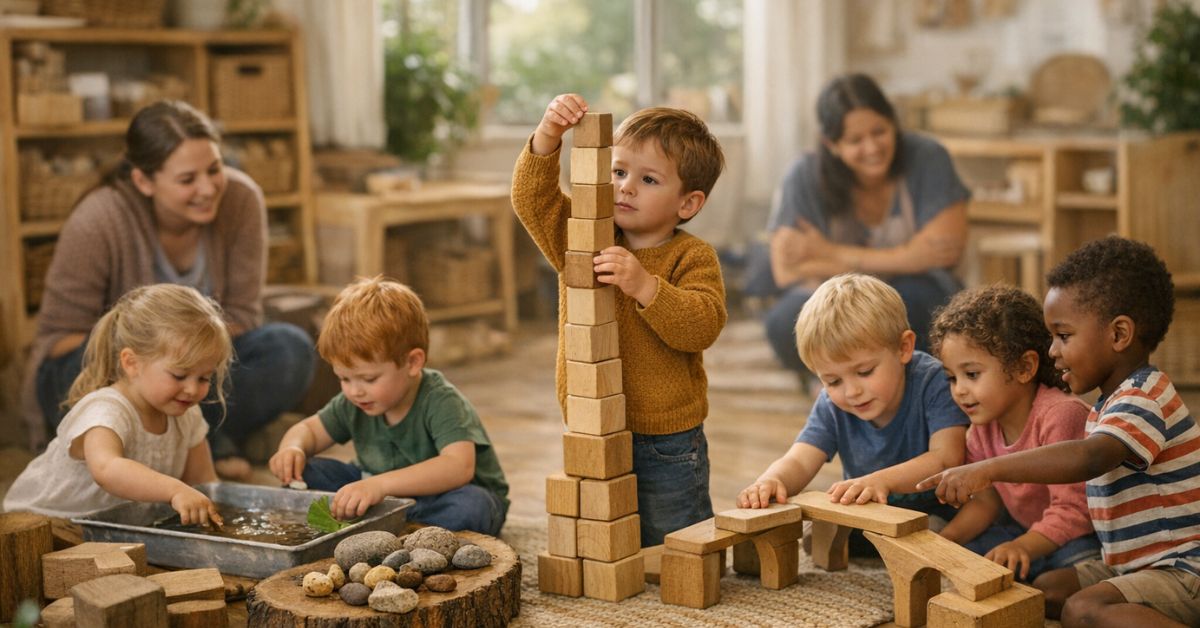
At Little Mowgli Nursery, we see these characteristics in action every day. When a toddler stacks blocks repeatedly until they master balance, or when a preschooler creates an imaginary world in the outdoor area, these are not just play moments. They are learning in its purest form.
The three characteristics work together. A child might explore a new material (playing and exploring), persist when their first attempt doesn't work (active learning), and then develop a new strategy (creating and thinking critically). This interconnected approach mirrors how learning actually happens in young minds.
Characteristic 1: Playing and Exploring (Engagement)
Playing and exploring describes how children engage with their learning environment. This characteristic captures children's natural curiosity and willingness to investigate new experiences.
What Does Playing and Exploring Look Like?
Children demonstrate this characteristic through:
Finding Out and Exploring Young children show curiosity about objects, events, and people. A baby might grasp at a colourful toy, while a toddler investigates how water moves through different containers. They use all their senses to explore the world. Research shows that this sensory exploration is how children build their first understanding of concepts like texture, temperature, and weight.
Playing With What They Know Children represent their experiences through pretend play. A three-year-old might transform a cardboard box into a car, drawing on their real-world knowledge. They take on roles in their play, acting out experiences with peers and adults. This type of play helps children process their experiences and develop social understanding.
Being Willing to "Have a Go" Children initiate activities independently and show a "can do" attitude. They seek challenges and take risks with new experiences. This willingness to try, even without guaranteed success, builds confidence and resilience.
Why Playing and Exploring Matters
When children engage freely through play, they develop the foundation for all future learning. Their curiosity drives them to ask questions, make discoveries, and build knowledge. Studies indicate that children who exhibit higher curiosity in early years show better academic performance in reading and mathematics later.
At Little Mowgli Nursery, our nature-inspired approach gives children rich opportunities to explore. Our outdoor area provides natural materials like twigs, leaves, and stones that spark curiosity. These open-ended resources allow children to investigate, experiment, and discover at their own pace.
Supporting Playing and Exploring
Practitioners support this characteristic by:
- Providing time and space for uninterrupted play
- Offering stimulating, open-ended resources that children can use in multiple ways
- Following children's interests and building activities around what fascinates them
- Modelling curiosity and showing genuine interest in discoveries
- Creating safe spaces where children feel confident to experiment
The key is to step back and let children lead. When adults resist the urge to direct every activity, children develop autonomy and independence.
Characteristic 2: Active Learning (Motivation)
Active learning describes how children stay motivated and maintain focus on their learning. This characteristic is about persistence, concentration, and enjoying the satisfaction of achieving goals.
What Does Active Learning Look Like?
Being Involved and Concentrating Children maintain focus on activities that interest them. They show high levels of energy and fascination. A child absorbed in building a tower or completing a puzzle demonstrates active learning. They concentrate despite distractions when truly engaged.
Keeping on Trying When things don't work the first time, children persist. They show a willingness to try different approaches and learn from mistakes. This resilience is one of the most valuable skills children can develop.
Enjoying Achieving What They Set Out to Do Children take pride in their accomplishments. They show satisfaction when they complete challenging tasks. This enjoyment of success motivates them to tackle new challenges.
Why Active Learning Matters
Active learning builds the stamina and determination children need for lifelong learning. When children learn to persist through challenges, they develop what researchers call a "growth mindset" the understanding that effort and practice lead to improvement.
This characteristic goes beyond physical activity. A child silently concentrating on fitting puzzle pieces together shows as much active learning as one climbing outdoor equipment. The motivation comes from within, driven by genuine interest rather than external rewards.
Supporting Active Learning
Little Mowgli Nursery supports active learning by:
- Allowing children to choose activities based on their interests
- Giving children time to return to activities over multiple sessions
- Celebrating effort and the learning process, not just the end result
- Helping children understand that mistakes are part of learning
- Providing activities at appropriate developmental levels so children feel challenged but not overwhelmed
Parents can support active learning at home by praising the process. Instead of saying "What a beautiful painting," try "I noticed how carefully you mixed those colours" or "You kept trying until you got it right."
Characteristic 3: Creating and Thinking Critically
Creating and thinking critically describes how children develop their own ideas, make connections, and devise strategies. This characteristic represents the thinking skills that underpin problem-solving and creativity.
What Does Creating and Thinking Critically Look Like?
Having Their Own Ideas Children think of ideas independently. They find ways to solve problems and discover new ways to do things. A child who figures out how to reach a toy on a high shelf or creates a new game with friends demonstrates this skill.
Making Links Children connect ideas and make connections between different experiences. They notice patterns and relationships. When a child says "This is like when we..." they are making these vital links that deepen understanding.
Choosing Ways to Do Things Children plan and think ahead about how to approach tasks. They check their progress as they work and change strategies when needed. They review their approach after completing activities. This metacognition thinking about thinking is a sophisticated skill that develops through practice.
Why Creating and Thinking Critically Matters
These thinking skills prepare children for all future learning. When children can analyse problems, devise solutions, and adjust their approach, they become independent learners. These skills extend far beyond early years education into every aspect of life.
The EYFS framework recognises that children who develop strong critical thinking skills early are better equipped to handle academic challenges later. They become resourceful learners who can adapt to new situations.
Supporting Creating and Thinking Critically
At Little Mowgli Nursery, we support critical thinking through:
- Asking open-ended questions that encourage children to think and explain
- Providing problems to solve through play (like building bridges or creating obstacle courses)
- Encouraging children to plan activities before starting them
- Discussing different ways to approach tasks
- Helping children reflect on what they've learned and how they did it
Our practitioners use "sustained shared thinking" engaging in extended conversations that help children develop their ideas. When a child shares a thought, we might ask "Why do you think that?" or "What would happen if...?" These questions scaffold deeper thinking.
How the Three Characteristics Work Together
While we can describe each characteristic separately, they rarely operate in isolation. Watch a child in any nursery setting and you'll see all three characteristics in action simultaneously.
Consider a child building with blocks:
- They explore different blocks and investigate how shapes fit together (playing and exploring)
- They concentrate on their task and persist when their tower falls (active learning)
- They develop a strategy to make it more stable and adjust their approach based on what works (creating and thinking critically)
This integration is what makes the characteristics of effective learning so powerful. Together, they create confident, capable learners who approach challenges with curiosity and determination.
The Role of Adults in Supporting Effective Learning
Practitioners and parents play a crucial part in developing these characteristics. The adult role is not to teach these skills directly but to create environments and interactions that allow them to flourish.
Research shows several key approaches work best:
Create the Right Environment Provide diverse, interesting materials that invite exploration. Include natural objects, loose parts, and open-ended resources. Arrange space so children can move freely between activities.
Follow Children's Interests Observe what captures children's attention and build on it. When a child shows fascination with dinosaurs or water, create opportunities to explore these interests deeply.
Allow Time Effective learning cannot be rushed. Children need extended periods to immerse themselves in activities. At Little Mowgli Nursery, we protect children's play time, recognising that interruptions can disrupt deep learning.
Model Learning Behaviours Show children how you approach problems, admit mistakes, and try different solutions. Your own curiosity and persistence teach powerful lessons.
Use Thoughtful Language Talk about the learning process. Comment on effort, strategies, and thinking rather than just outcomes. This helps children become aware of their own learning.
Why These Characteristics Matter for School Readiness
The EYFS Profile assessment at the end of Reception focuses heavily on these characteristics. Teachers provide commentary on how children demonstrate playing and exploring, active learning, and creating and thinking critically.
But the value extends far beyond assessment. Children who develop strong characteristics of effective learning enter Year 1 better equipped for formal education. They can:
- Focus on tasks for appropriate periods
- Work through challenges without giving up
- Think flexibly about problems
- Work independently and make choices
- Engage actively with new learning
These skills matter more than any specific knowledge children might have. A child who can persist, think critically, and approach new experiences with confidence will succeed across all areas of the curriculum.
Supporting Effective Learning at Home
Parents can reinforce these characteristics at home through everyday activities:
Encourage Free Play Give your child unstructured time with simple materials. Cardboard boxes, cushions, and household items often spark more creativity than expensive toys.
Ask Questions When your child shows you something, ask open-ended questions. "How did you do that?" "What will you try next?" These questions encourage reflection.
Let Them Struggle (A Bit) When your child faces a challenge, resist jumping in immediately. Give them time to figure things out. Offer help only when needed, and then provide just enough support to let them succeed independently.
Celebrate Effort Notice when your child persists, tries different approaches, or shows curiosity. Specific praise about the learning process reinforces these behaviours.
Embrace Mistakes Share your own mistakes and how you learned from them. This normalises setbacks as part of learning.
The Long-Term Impact
The characteristics of effective learning are not just early years skills. They form the foundation for lifelong learning. Adults who approach new situations with curiosity, persist through challenges, and think critically are applying these same characteristics.
Research consistently shows that these learning dispositions predict success better than early academic achievement. A child who leaves early years education with strong characteristics of effective learning is well-positioned for future success, even if they haven't yet mastered all the early learning goals.
At Little Mowgli Nursery, we see our role as nurturing these characteristics in every child from 3 months onwards. Whether a baby explores a new texture or a four-year-old devises a complex game with friends, we recognise and support these fundamental ways of learning.
Frequently Asked Questions
What are the three characteristics of effective learning in the EYFS?
The three characteristics are playing and exploring (engagement), active learning (motivation), and creating and thinking critically. These describe how children learn rather than what they learn. They work together to help children become confident, capable learners who can concentrate, persist through challenges, and develop their own ideas.
How can I tell if my child is developing good learning characteristics?
Look for signs like your child showing curiosity about new things, concentrating on activities that interest them, trying again when something doesn't work, and coming up with their own ideas during play. These behaviours indicate strong characteristics of effective learning. Most importantly, watch whether your child approaches new experiences with confidence rather than anxiety.
Why are the characteristics of effective learning more important than academic skills?
The characteristics of effective learning are the foundation for all future learning. A child with strong learning characteristics can adapt to new situations, think flexibly, and persist through challenges. These skills matter more than early academic knowledge because they enable children to learn anything. Children can memorise facts, but without curiosity, persistence, and critical thinking, they struggle when faced with new or complex learning.
How do nurseries support the characteristics of effective learning?
Quality nurseries support these characteristics through child-led play, open-ended resources, outdoor learning, and thoughtful adult interactions. At Little Mowgli Nursery, we create environments where children can explore safely, provide time for deep engagement in activities, and use questioning techniques that encourage thinking. We observe children carefully to understand their interests and plan experiences that build on what fascinates them.
Can the characteristics of effective learning be taught?
The characteristics of effective learning cannot be taught directly like academic content. Instead, they develop through experience and practice in the right environment. Adults support their development by creating conditions where children can explore freely, encounter appropriate challenges, make choices, and develop independence. The adult role is to facilitate and support rather than instruct. When children have regular opportunities to play, explore, and think in supportive environments, these characteristics naturally flourish.
Leyland, PR25 2DY

.svg)